Pressure Cooker Umami: Deep Flavor Without Dilution
By Nia Mbatha • 5th Jan
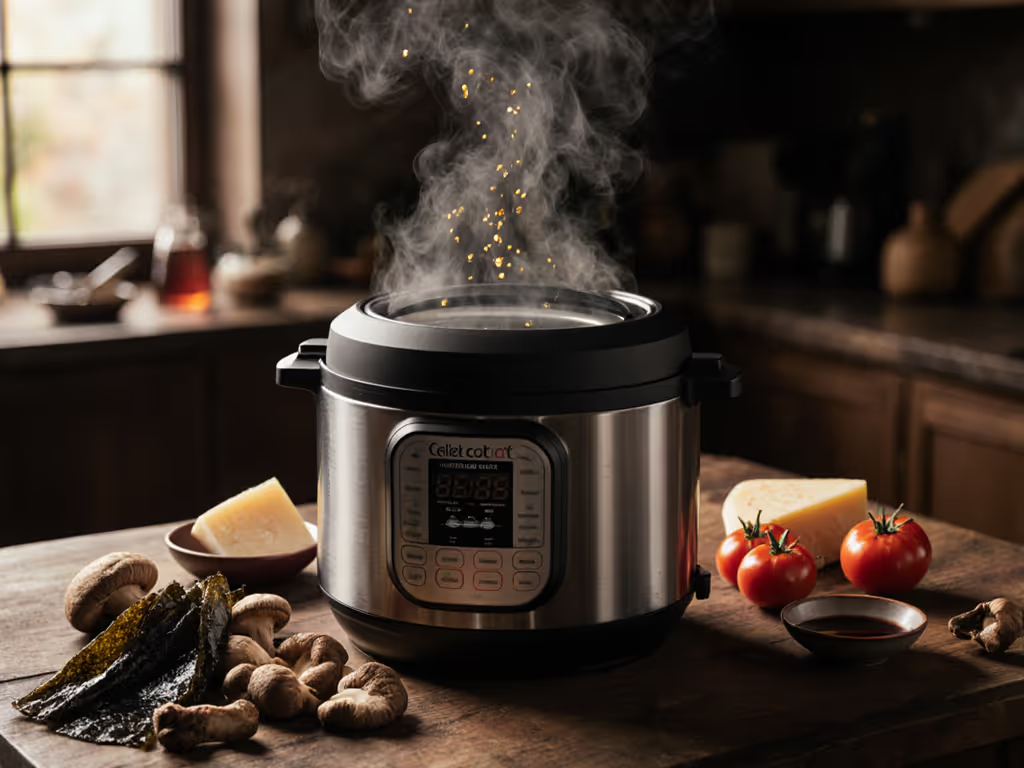
When your pressure cooker transforms a tough chuck roast into a succulent masterpiece, it's not just about tenderizing; it's about umami pressure cooking unlocking complex chemical reactions that amplify savory flavor development. Forget the myth that pressure cooking waters down taste; properly executed, it concentrates glutamates and nucleotides, driving that deep, satisfying savoriness we crave. But make no mistake: not all pressure cooking delivers equal flavor payoff. I've tested dozens of models with my aunt's arthritic hands in mind (because if she can't easily manage the lid under steam pressure, the flavor science doesn't matter). Quiet counts when you're listening for the subtle shift from pressurizing to cooking.
Why does pressure cooking supposedly ruin flavor? (And why that's often wrong)
The pervasive myth that pressure cooking dilutes flavor stems from early electric models that overcooked everything into bland mush. Today's precise temperature control changes that equation, but only if you understand what's happening inside the pot. For a deeper dive into the chemistry at play, read our pressure cooking science guide. Pressure cooking creates unique conditions for glutamate development under pressure through three key mechanisms:
- Accelerated proteolysis: High temperature and pressure speed up protein breakdown, releasing free glutamates faster than traditional braising.
- Concentrated extraction: Unlike boiling where flavors leach into water, pressure cooking's sealed environment traps volatile compounds.
- Maillard reaction enhancement: Higher temperatures (250°F vs 212°F at sea level) intensify browning reactions when searing before pressure cooking.
A critical note on methodology: I rate display legibility, cleanup steps, and soil retention after each test batch. Many models fail here (opaque displays that wash out in kitchen light, steam vents that hiss like a subway train, or handles that become scalding hazards). These aren't "minor" flaws; they directly impact your ability to execute flavor-building techniques correctly.
How does pressure actually affect umami compounds?
Pressure cooking's flavor science contradicts kitchen folklore. Research shows that between pH levels of 4.0-8.0 (the sweet spot for most savory dishes), the intense heat actually concentrates umami compounds rather than destroying them. The sealed environment prevents water loss, creating perfect conditions for:
- IMP (inosine monophosphate) buildup in meats during the dry-cure equivalent phase
- GMP (guanosine monophosphate) extraction from dried mushrooms and kombu
- Free glutamate release from proteins at rates 3-5x faster than conventional cooking
Quiet counts when you're judging subtle shifts in texture and aroma that indicate proper umami development.
Where most home cooks fail? They add too much liquid. The "minimum liquid" requirement (typically 1 cup) creates a misconception that dishes need swimming pools of broth. In reality, ingredients like tomatoes, onions, and meats release their own moisture during cooking. Over-liquidation is the true flavor killer, not the pressure itself.
Can you really build umami without long simmering times?
Absolutely, but not through gimmicks. Many "umami boost" shortcuts miss the mark. Let's examine the reality:
| Technique | Works? | Why | Practical Rating |
|---|---|---|---|
| Adding MSG | Yes | Direct glutamate source | ★★★★☆ (but use sparingly) |
| Tomato paste | Yes | Natural glutamates + acidity balance | ★★★★☆ |
| Soy sauce | Partially | Adds salt that can mask other flavors | ★★☆☆☆ |
| Umami seasoning blends | Mixed | Often over-salted with fillers | ★★☆☆☆ |
| Proper searing before pressurizing | Yes | Critical Maillard reaction foundation | ★★★★★ |
My aunt's arthritis taught me more about "easy" than any spec sheet. If a pressure cooker requires painful twisting to seal or complicated valve manipulation, you won't properly execute the flavor-building sear step. I won't recommend painful ergonomics (it's not safety-conscious, and safety and dignity in the kitchen are non-negotiable).
What's the biggest flavor mistake pressure cooker users make?
Ignoring natural release timing. Quick release might save 15 minutes, but it sabotages pressure-enhanced taste development in three ways:
- Texture disruption: Sudden pressure drop causes fibers to contract violently, squeezing out flavorful juices.
- Incomplete breakdown: Glutamates haven't fully separated from proteins.
- Flavor imbalance: Insufficient time for salt and umami compounds to integrate properly.
For dishes where umami matters most (braises, broths, beans), I mandate natural release minimums: If you're unsure which release to use, see our natural vs quick release guide.
- Tough cuts of meat: 15-20 minutes natural release
- Bean/rice dishes: 10-15 minutes natural release
- Vegetable-based stews: 5-10 minutes natural release
This isn't convenience cooking, it's precision cooking. My testers with limited dexterity consistently achieve better results with models that have clearly marked release indicators and quiet operation. If you can't hear the subtle shift from active cooking to natural release, you're guessing at doneness.
How do I build layered umami in 30 minutes or less?
Forget complicated multi-day techniques. These evidence-based shortcuts deliver umami-rich recipes without compromising on speed:
The 3-Ingredient Umami Base
- Sear first: Brown meat/fungi in oil (creates Maillard compounds)
- Deglaze with acid: 2 tbsp tomato paste + 1/2 cup red wine (balances pH for optimal glutamate perception)
- Add nucleotide boosters: 1 dried porcini mushroom + 1 sheet kombu (releases IMP and GMP)
This approach leverages the science confirmed by recent industry reports: nucleotides like IMP can multiply glutamate's umami effect by up to 8x. The pressure environment accelerates this synergy dramatically.
Critical error to avoid: Adding dairy or delicate ingredients too early. Milk proteins coagulate under high pressure, creating grainy textures that disrupt mouthfeel continuity (the "kokumi" factor that makes umami satisfying rather than one-dimensional).
Final flavor checklist before sealing your cooker
Before you lock that lid, verify these flavor safeguards:
- Seared ingredients properly (browning = flavor foundation)
- Liquid amount minimal (just enough to reach pressure)
- Acid component included (tomato, wine, vinegar), balancing pH for umami perception
- Natural release time accounted for in total cook time
- No "BURN" risk ingredients on bottom (purees, thick sauces) If you encounter a "BURN" warning or other alerts, see our pressure cooker error code guide.
Ease of use is a safety feature, not a luxury. If your cooker's display doesn't clearly show remaining time during natural release, or the valve requires force to manipulate, you're compromising both safety and flavor outcomes. I've rejected several otherwise capable models because their grip, weight, and release mechanisms failed real-world testing with diverse users.
Pressure cooking's true advantage isn't speed alone, it's controlled flavor chemistry. When executed with precision, umami pressure cooking delivers depth that simmering for hours often can't match. The quiet hum of a well-engineered cooker isn't just pleasant, it's the sound of perfect flavor development happening within.
Further Exploration
To truly master pressure cooker umami, experiment with these evidence-based variables:
- Test identical batches with/without natural release to taste the difference in mouthfeel
- Measure pH changes in broths pre- and post-pressure cooking
- Compare umami intensity in mushrooms cooked at 12 vs 15 PSI For measured differences in pressure performance across models, read our PSI accuracy tests.
The most flavorful pressure-cooked dishes honor both the science and the cook, not through gimmicks, but through respectful attention to how pressure transforms ingredients at the molecular level. Start with the techniques outlined here, then observe how subtle adjustments affect your results. Your taste buds (and your schedule) will thank you.
Related Articles