Pressure Cooker Comparison: High vs Low-Acid
By Arjun Mehta • 4th Apr
Pressure Cooker Comparison: High vs Low-Acid Foods and USDA Canning Standards
When it comes to home preservation, the distinction between canning methods for high- and low-acid foods isn't just academic, it is the foundation of food safety. Whether you're using a stovetop or USDA electric pressure canner, understanding which tool matches which food type, and at what PSI and temperature, determines whether your pantry stays safe or becomes a risk. This guide breaks down the critical differences, the measurements that matter, and the decision framework that separates guesswork from confidence.
Why the Type of Food Matters: Acidity, Bacteria, and Pressure
Q: What's the practical difference between high-acid and low-acid foods when pressure canning?
High-acid foods (pickles, jams, most fruits, and fermented vegetables) have a natural pH below 4.6. This acidic environment inhibits the growth of Clostridium botulinum, the bacterium responsible for botulism. Low-acid foods (beans, meats, soups, and most vegetables) sit above pH 4.6 and require different handling.
For high-acid foods, a boiling-water canner (212 °F / 100 °C at sea level) is sufficient. For low-acid foods, you must reach 240 to 250 °F (116 to 121 °C), which requires pressure canner temperature stability at 10 to 15 PSI (69 to 103 kPa) depending on altitude. That temperature difference isn't arbitrary; it's the threshold where spore inactivation becomes reliable. To see why those temperatures are achievable and controlled, read how pressure cooker safety valves manage PSI.
I learned this distinction the hard way during a weekend when I attempted to can white beans using only hot water. The jars sealed beautifully, but the safety margin was zero. I pulled them out and invested in a proper stovetop pressure canner. Now, every batch is logged with the exact PSI reading, the minute heat was applied, and the natural release duration. Control your variables, control your outcomes (and in canning, that means your health).
Key Measurement: PSI and Altitude Adjustments
Q: Does PSI really change based on where I live?
Yes, and this trips up most home canners. At sea level, low-acid foods require 10 PSI on a dial-gauge canner or 11 PSI on a weighted-gauge canner. But as altitude increases, atmospheric pressure drops, so you must compensate by increasing canner pressure:
- 0 to 1,000 ft: 10 PSI (dial) or 11 PSI (weighted)
- 1,001 to 2,000 ft: 11 PSI (dial) or 12 PSI (weighted)
- 2,001 to 4,000 ft: 12 PSI (dial) or 13 PSI (weighted)
- 4,001 to 6,000 ft: 13 PSI (dial) or 14 PSI (weighted)
- 6,001 to 8,000 ft: 14 PSI (dial) or 15 PSI (weighted)
This isn't optional. USDA compliance for home canning mandates these adjustments; skipping them invalidates your safety margin. For elevation-specific protocols, use our high-altitude adjustment guide to dial in PSI and timing. If you're moving, upgrading canners, or canning at a cabin at elevation, verify your altitude and recalibrate your process.
High-acid foods, by contrast, never require pressure adjustment for altitude, they use boiling water at atmospheric pressure.
High-Acid Food Canning: Boiling Water Is Sufficient
Q: Can I use a pressure canner for high-acid foods?
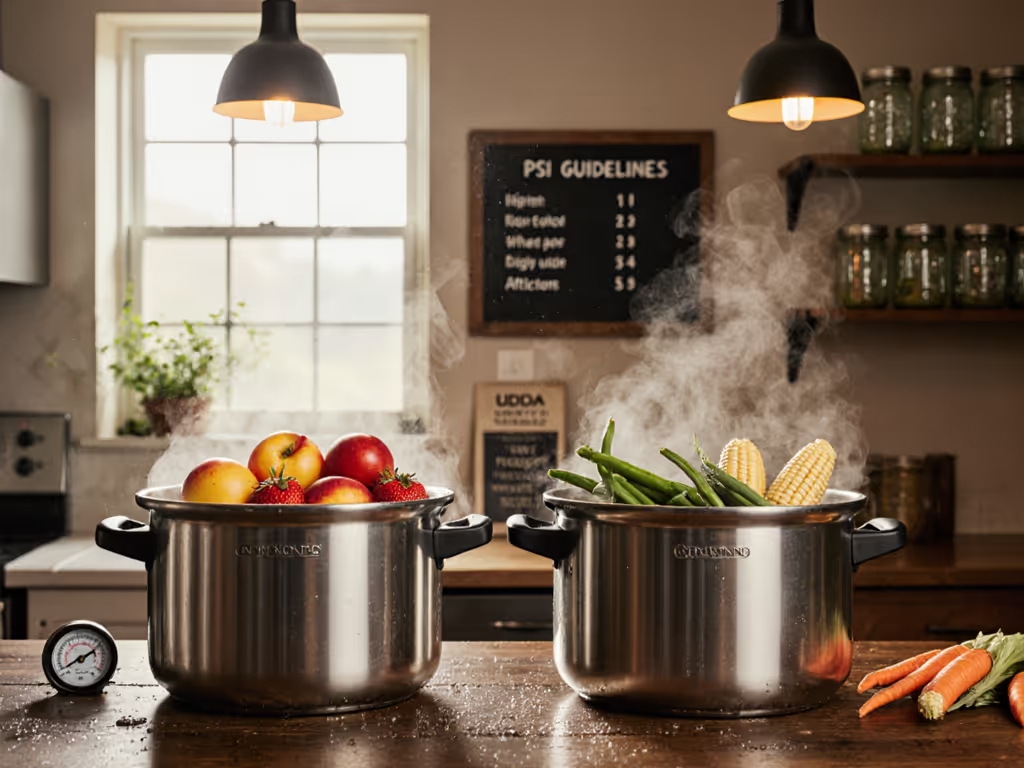
Technically, yes, but there's no benefit. High-acid fruits, jams, pickles, and most tomato products (pH 4.6 or lower) are safely processed in a boiling-water canner at 212 °F (100 °C) for the USDA-recommended time.
Using a pressure canner for high-acid foods introduces unnecessary complexity: you'll waste fuel, take longer, and expose yourself to steam risk without gaining any food safety advantage. Boiling water is the appropriate tool; use it.
Typical processing times (at sea level, in a boiling-water canner):
- Jams and jellies: 5 to 20 minutes depending on jar size
- Pickles: 10 to 20 minutes
- Fruit (raw pack): 20 to 30 minutes
- Tomatoes and tomato sauce: 35 to 85 minutes depending on jar size and whether salt/acid is added
High-acid foods also have a longer shelf life, typically 1 to 2 years, because the acidity preserves both safety and quality.
Low-Acid Food Canning: Pressure Is Required
Q: What foods demand a pressure canner, and what are the processing times?
Low-acid food canning includes:
- All non-pickled vegetables (beans, corn, peas, carrots, beets)
- Meats (chicken, beef, fish) and poultry
- Soups, stews, and broths (unless acidified)
- Most combination dishes
- Low-acid fruits like bananas and avocado
Processing times vary by food, jar size, and packing method (raw or hot pack). A few examples at sea level using a weighted-gauge canner at 11 PSI:
- Pints of green beans: 20 minutes
- Quarts of green beans: 25 minutes
- Pints of chicken (hot pack): 75 minutes
- Quarts of beef stew: 90 minutes
- Pints of black beans: 90 minutes
These times are non-negotiable. Before processing, run a quick pressure canning safety check—gasket integrity, vent path, and gauge accuracy—to keep every batch compliant. They're backed by USDA testing and ensure adequate heat penetration to the slowest-heating point in the jar. Undercooking is the primary risk factor for botulism.
Low-acid canned goods typically remain safe and flavorful for 1 to 2 years, though quality (color, texture) may degrade. Always use USDA-compliant home canning resources (Ball, NCHFP, or the USDA directly) for processing times and methods; never guess or adapt times from untested recipes.
Stovetop vs. Electric Pressure Canners: Trade-offs
Q: What's the practical difference between a stovetop and electric pressure canner?
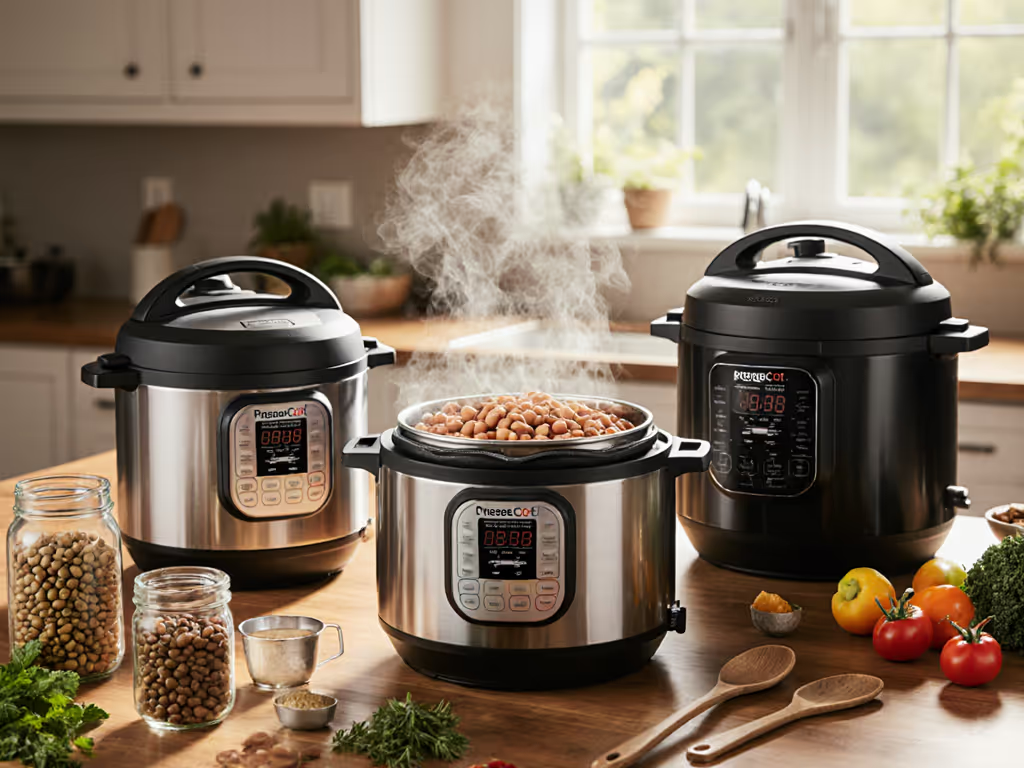
A stovetop pressure canner heats via direct flame or electric coil, reaching target PSI through manual heat control. You monitor the gauge, adjust heat as needed, and start timing once stable pressure is reached. Typical preheat time: 5 to 10 minutes. Heat-up is fast, and maintenance is minimal (just keep the vent pipe clear). If you’re deciding between appliance types, see our stovetop vs electric PSI comparison for canning stability insights.
An electric pressure canner (like many modern USDA electric pressure canner models) uses an immersion heater and automated controls. You set PSI and walk away. Shopping for automation? See the best electric pressure canners side-by-side with safety features and capacity notes. Preheat time is often longer (10 to 15 minutes), but once stable, pressure holds automatically. Some electric canners have data logging or alert functions, which appeal to systematic cooks.
Key trade-offs:
| Factor | Stovetop | Electric |
|---|---|---|
| Preheat time | 5 to 10 min | 10 to 15 min |
| PSI stability | Manual adjustment (requires attention) | Automatic (hands-off) |
| Batch size flexibility | Any compatible jar size up to canner capacity | Limited by fixed basket/racks |
| Maintenance | Vent pipe cleaning; minimal moving parts | Gasket/seals; electronic components |
| Cost | $25 to $50 (used); $75 to $150 (new) | $150 to $400+ |
| Heat loss per batch | Minimal (canner stays on stove) | Possible (cool-down and reheat cycles) |
For a household canning 20 to 40 jars annually, a stovetop canner is more economical and flexible. For high-volume canners (100+ jars/year) or those with safety anxiety, an electric canner's automation may justify the investment.
Related Articles