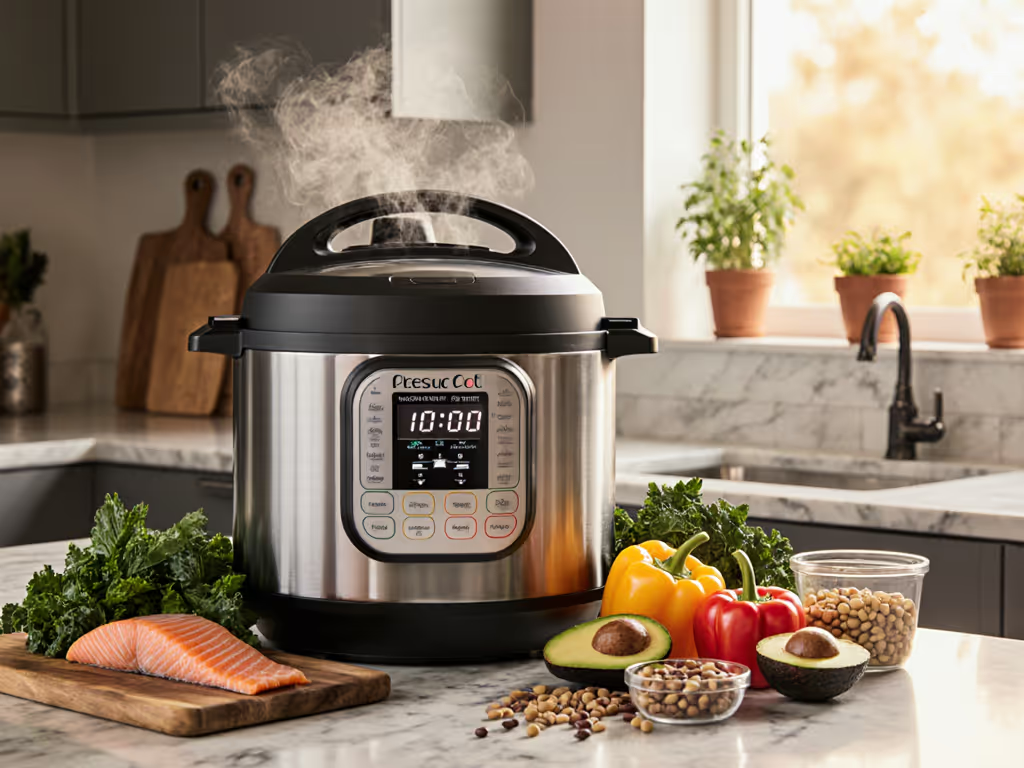
Medicinal Pressure Cooking: Extract Safely
By Nia Mbatha • 24th Apr
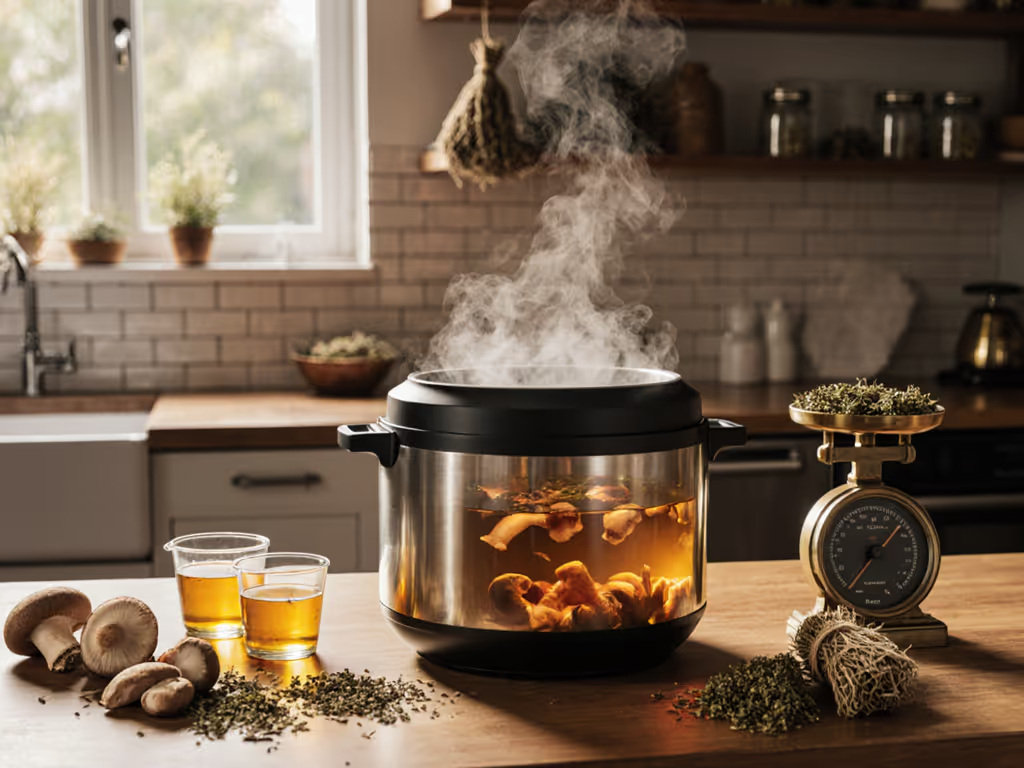
Medicinal pressure cooking represents a precision method for extracting therapeutic compounds from herbs, mushrooms, and plant materials, but it's not a shortcut that bypasses care. The difference between herbal infusion pressure cooking done well and done carelessly lies in your equipment choices, timing decisions, and understanding of what you're actually trying to extract. Ease-of-use is a safety feature, not a luxury: when your display is legible, your venting protocols are clear, and your manual isn't shrouded in ambiguity, you extract better compounds and protect yourself from burns, clogging, and failed batches.
This guide separates evidence from wellness marketing and gives you the clarity you need to work safely with medicinal materials.
What's the difference between medicinal and regular pressure cooking?
Regular pressure cooking prioritizes speed and texture, you're racing to tenderness in a sealed environment. Medicinal extraction is different: you're after compound concentration and bioavailability, not necessarily speed. The pressure method works here because sealed heat prevents volatile oils and heat-sensitive nutrients from escaping with steam, keeping them in the liquid. But the timing, liquid ratios, and release methods matter far more than they do for a pot roast.
With herbal infusions and mushroom broth techniques, you're often working with lower pressures and longer hold times (or, in some cases, moderate pressure with careful monitoring). The goal is gentle but thorough extraction, which contradicts the "set and forget" convenience that regular pressure cooking promises. Your equipment's clarity is critical here: if your display is dim in kitchen light or your manual doesn't specify low-pressure settings, you'll struggle to dial in the right intensity.
How does pressure actually preserve medicinal compounds?
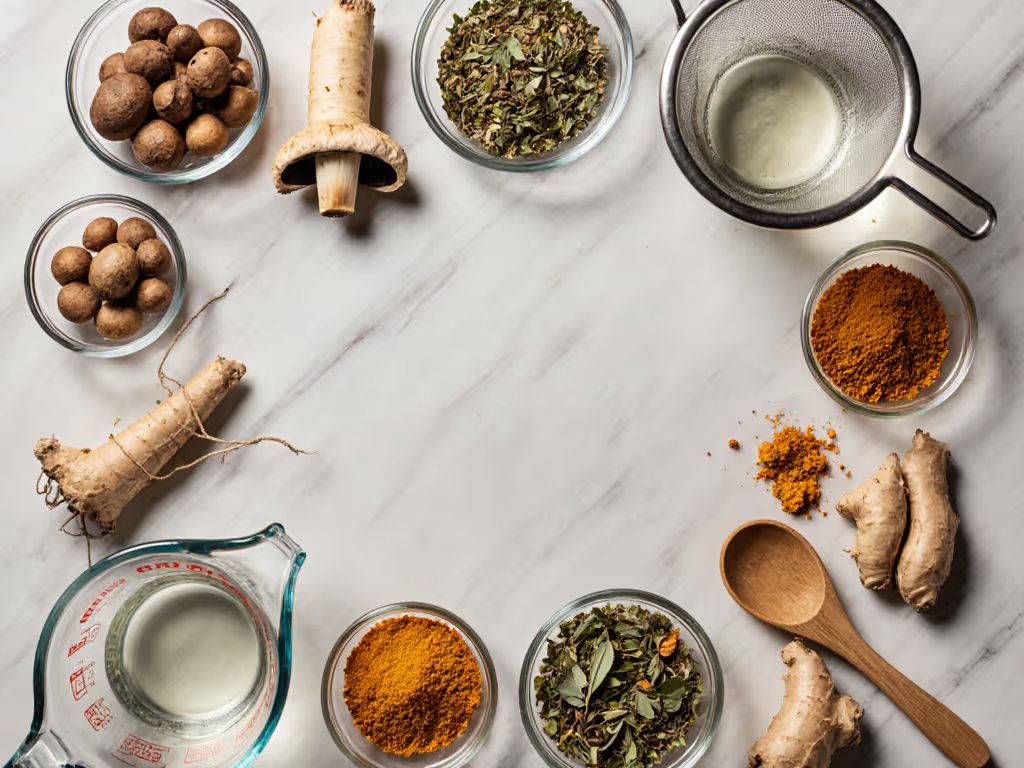
When you simmer herbs and mushrooms on the stove for an hour, you lose volatile aromatics, heat-sensitive vitamins, and water-soluble phytocompounds to evaporation. A pressure cooker traps that steam and keeps it cycling through your material, pushing compounds back into solution rather than letting them escape into thin air.[1][3] Research confirms this pattern: pressure-cooked preparations retain 90-95% of vitamins compared to boiling's 40-75%.[3] For a deeper dive into nutrient retention under pressure, read our vitamin retention guide. For compounds like phytic acid (which binds minerals and reduces bioavailability), pressure cooking is nearly twice as effective as standard boiling.[3]
Medicinal compound preservation in mushroom broths shows measurable differences. The cell walls of medicinal mushrooms are notoriously tough; six hours of low-temperature simmering and 30 minutes of high-pressure extraction can yield comparable results in terms of compound concentration.[1] The pressure method gets you there faster while reducing loss of heat-sensitive nutrients.
The skeptical part: longer cooking times destroy some compounds (particularly heat-sensitive vitamin C) regardless of method.[4] For adaptogenic herb extraction, the sweet spot is often 15-25 minutes on low pressure, not "cook it longer because pressure is faster."[2]
What pressure settings and temperatures should I use for herbal extraction?
This is where skepticism is warranted. Most electric pressure cookers default to high pressure (~11-12 PSI). If you're unsure how low and high settings translate to actual pressure, review how PSI control works to calibrate your expectations. For medicinal work, you often need low pressure (~5-6 PSI), and many models make this transition awkwardly (buried in a submenu or requiring a separate accessory).
Stovetop cookers give you more control: you can hear the hiss and gauge venting by ear. A gentle, steady whistle means correct pressure; a train-like roar means too much. Quiet counts, if your cooker is screaming, you're likely overcooking volatile compounds and losing the very compounds you're trying to preserve.
For typical herbal infusions: 5-6 PSI for 15-20 minutes. For denser materials like mushroom broth or woody roots: 8-10 PSI for 25-35 minutes. For delicate flowers or volatile oils: consider a thermos method instead (passive infusion in preheated water rather than active pressure).
The manual must spell this out clearly. If yours doesn't, or if your electric model hides low-pressure settings deep in submenu hierarchies, consider a stovetop cooker for medicinal work. A confusing manual is a barrier to safe, repeatable extraction.
How do I prevent foaming, clogging, and failed extractions?
Herbal material foams. Mushroom powder foams more. Adaptogenic herb extraction (ashwagandha, rhodiola, reishi) is notorious for creating foam that blocks your steam vent and triggers "BURN" errors.
Prevent this:
- Fill the pot no more than 1/3 full with solids and liquid combined.
- Add a few drops of oil (coconut or sesame) to break surface tension and reduce foam.
- Use a fine-mesh strainer insert to keep particles away from the vent.
- Never seal immediately after adding material; let pressure build gradually and monitor the rise.
- If foam does block the vent, your cooker should have an audible or visual alert. If your cooker struggles to build or hold pressure, use our guide to troubleshoot steam leaks and pressure build problems. Know where that alert is before you start.
The display must show pressure rising in real time, not just a "ready" light that appears when it's too late. If your cooker only tells you after an error occurs, you're working blind, which is unacceptable for medicinal work where precision matters.
How long should I actually cook medicinal compounds?
There's no universal answer, and sources often contradict each other. Here's what evidence shows:
Mushroom broth techniques: 30-45 minutes on moderate pressure yields the same compound extraction as six hours of simmering, with better nutrient retention.[1][3] Longer cooking (beyond 45 minutes) doesn't improve yield meaningfully.
Herbal infusions: 15-20 minutes for leafy herbs (mint, lemon balm), 20-30 minutes for flowers, 25-40 minutes for roots and barks. Adaptogens typically fall in the 20-25 minute range.
Nutrient preservation trade-off: Vitamin C begins degrading noticeably after 30 minutes of pressure cooking.[4] If your extraction targets heat-sensitive compounds, aim for the lower end of the range and rely on technique, not duration.
The real test: taste and color. An extract that's reached optimal concentration tastes richer without bitterness; the liquid has deepened in hue. Overcooking pushes past concentration into extraction of unwanted tannins and cellulose, making the brew bitter and cloudy.
What about safety with pressurized medicinal materials?
Here's the skeptical part: pressure cooking herbs is no more inherently dangerous than pressure cooking chicken. But medicinal materials sometimes behave differently (higher foam potential, different particle sizes, slower depressurization because of suspended solids).
Real risks worth managing:
- Vent blockage from foam, leading to pressure buildup and lid seal failure. Mitigate by filling conservatively and using insert baskets.
- Slow cooling because herbal broth cools slower than plain water alone. If you quick-release a pot of steaming mushroom broth, steam burns are a genuine hazard. Natural release (letting pressure drop on its own, 10-15 minutes) is safer here. Your cooker's manual must explain the difference and when to use each. If it doesn't, that's a red flag.
- Gasket integrity matters critically. If your rubber seal is worn, compromised, or contaminated with herbal particles, it won't seal properly on the next use. Inspect it before each session and replace it every 1-2 years or per the manual.
Ease and clarity are safety and dignity in the kitchen. A cooker with a clear display, audible alerts, and a manual that explains low-pressure settings isn't a luxury, it's your insurance policy.
How do I clean up efficiently after herbal extraction?
This is where real-world usability decides whether you'll actually stick with medicinal pressure cooking.
Herbal residue sticks. Mushroom powder creates a fine sludge. The inner pot, the lid gasket, and any mesh inserts collect particles and odors that linger.
Cleanup workflow:
- Let the pot cool to warm; don't submerge in cold water (thermal shock can warp the base).
- Remove the gasket and soak it separately. Herbal oils cling to silicone; a vinegar soak or baking soda paste for 15 minutes helps break them down.
- Scrub the inner pot with a soft brush; hard scrubbers can damage the surface coating.
- Pay special attention to the steam vent and lid rim, herbal particles hide there and create odor retention.
- Air-dry everything completely before reassembling. For long-term care that prevents odors and failures, follow our pressure cooker maintenance guide.
If your cooker has a coated inner pot, verify that no particles embedded themselves during cooking. If cleanup takes 20 minutes for a 30-minute extract, the friction cost becomes too high to sustain over time.
Some cookers have removable, dishwasher-safe lids and gaskets, which are easier to maintain and reset between batches. If yours requires careful hand-washing with drying caution, factor that friction into your decision.
The Bottom Line
Therapeutic cooking methods work when your equipment supports them. You need low-pressure options, a legible display that shows real-time pressure rise, a manual that explains each setting without ambiguity, and a gasket you can actually replace without tools or specialist knowledge.
Testing a new cooker with winter gloves on taught me more than any spec sheet; my aunt's arthritis decided what "easy" really meant. If a lid hissed like a train or took 20 minutes to clean, it lost points. Quiet, clear, and clean always won.
Before you commit to medicinal pressure cooking, run your cooker through a test extraction (use herbal material, low pressure, and natural release) and evaluate the full workflow: setup, monitoring, release, and cleanup. Does it feel manageable? Is every step clear? Then it's a tool worth using. If any step left you confused or frustrated, no amount of health benefit justifies the friction.
Ready to explore further? Start with your cooker's manual: locate its low-pressure settings and natural-release protocol. Then run a small test batch with common herbs (chamomile, ginger) using 15 minutes on low pressure. Keep a log of time, appearance, taste, and cleanup effort. You'll quickly calibrate what works for your materials and your workflow.
Related Articles