Precision Temperature Control: Safe Sous Vide Pressure Cooking
By Samira Haddad • 18th Jan
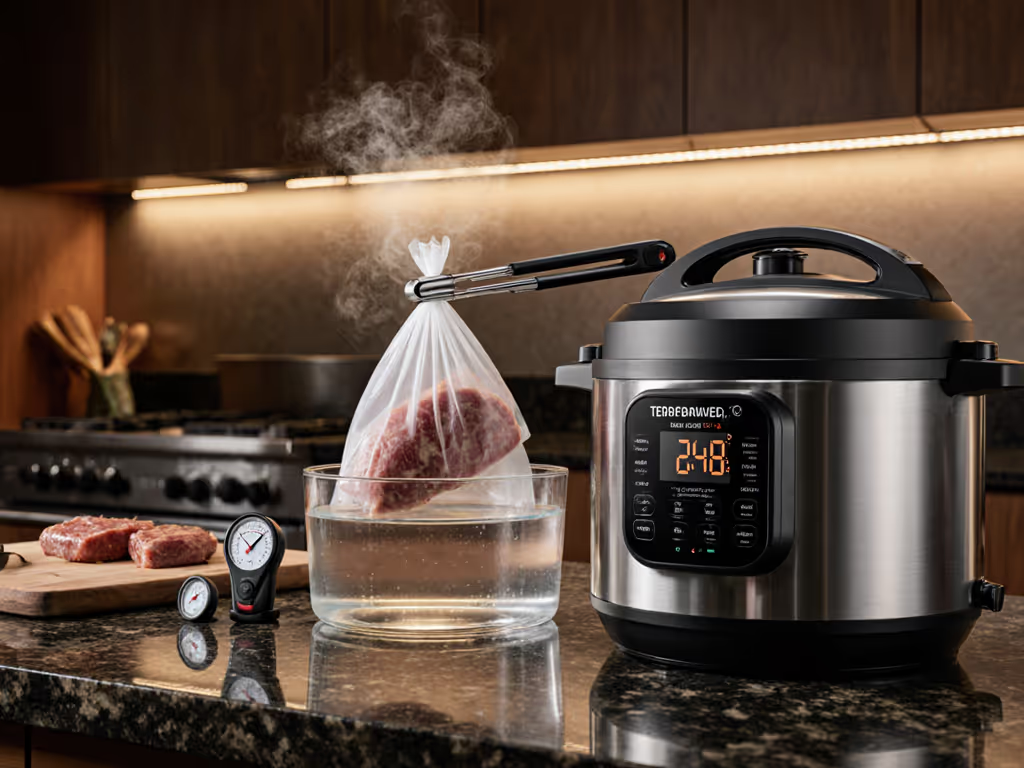
If you've ever searched for sous vide pressure cooking, you've likely encountered confusing information. Let's clarify immediately: sous vide is not pressure cooking. This common misconception creates real safety risks. Precision temperature control (the hallmark of sous vide) relies on exact water temperatures, not pressurized steam. Understanding this difference is your first safety checkpoint. For step-by-step setup using a multi-cooker’s sous vide mode, see our sous vide in pressure cookers guide. When executed correctly, sous vide's controlled low-temperature cooking kills pathogens more reliably than traditional methods, but only if you follow specific protocols. I've seen anxious home cooks abandon this technique because they conflated it with pressure cooking hazards. Today, we'll replace confusion with confidence through actionable safety routines.
Why This Confusion Happens (And Why It Matters)
Many modern multi-cookers advertise "sous vide" and "pressure" functions side-by-side, blurring the lines. But their safety protocols diverge completely:
- Pressure cooking uses steam under high pressure (typically 11-15 PSI) to raise boiling points, cooking food rapidly at 121°C (250°F).
- Sous vide uses vacuum-sealed bags in temperature-controlled water baths (typically 55-90°C / 131-194°F) for extended periods. No pressure is involved.
The danger zone for this confusion? Believing sous vide requires pressure-release steps or handles steam. It doesn't. Misapplying pressure-cooker safety habits (like quick-releasing steam) to sous vide creates complacency around actual risks: temperature inaccuracy and plastic integrity. If you’re unsure which steam release to use, read our natural vs quick release guide (for pressure cooking, not sous vide). As Douglas Baldwin's research confirms, sous vide's safety depends entirely on sustained, precise temperatures (not pressure spikes).
FAQ: Sous Vide Safety Fundamentals
How does low-temperature cooking actually kill bacteria?
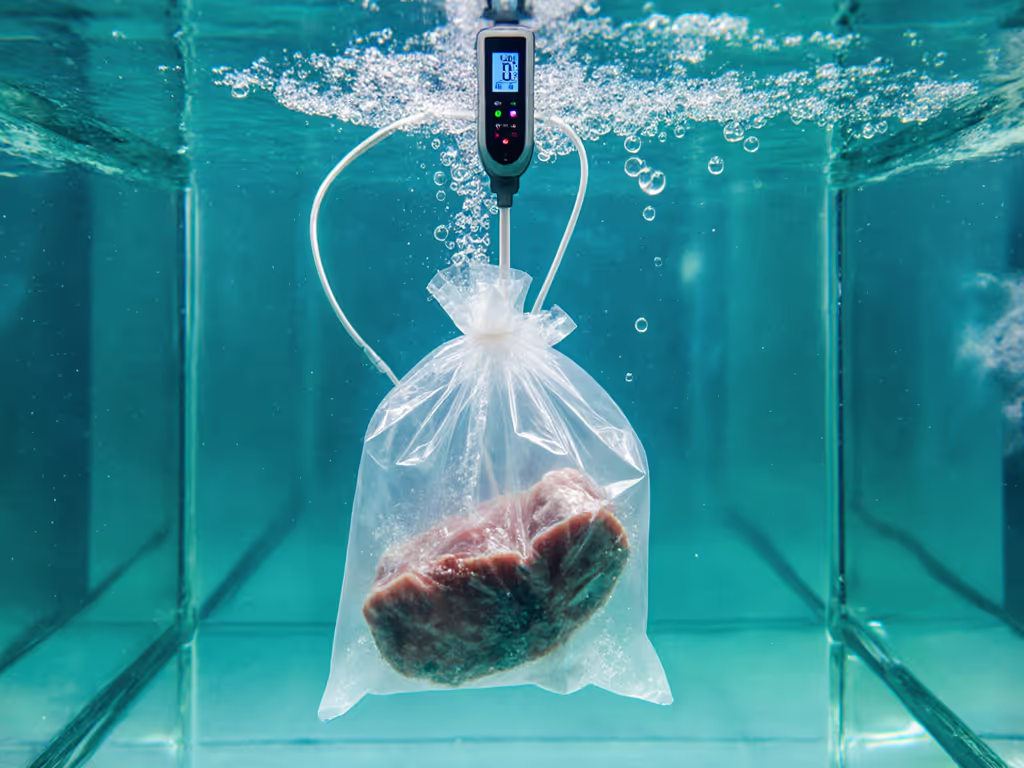
This is the #1 concern I hear from safety-conscious cooks. Critics argue: "Cooking chicken at 60°C (140°F) is dangerous!" Yet peer-reviewed studies prove otherwise. Unlike traditional methods where surfaces may briefly hit safe temps while interiors remain raw, sous vide's vacuum-sealed cooking ensures even, prolonged heat exposure. Harvard's Food Law & Policy Clinic notes that holding chicken at 60°C for 55 minutes achieves pasteurization by time-temperature synergy, not just peak heat. The sealed bag prevents recontamination, unlike open pans where bacteria resettles on cooked food. Critical caveat: Your immersion circulator must maintain exact temperatures. A 3°C deviation can compromise safety.
Are immersion circulators truly accurate? How do I test temperature accuracy?
"Set it and forget it" is dangerous with sous vide. I had a client nearly serve undercooked pork because her circulator read 5°C too low. Temperature accuracy testing is non-negotiable. Here’s your 2-minute pre-cook checklist:
- Calibrate with a separate thermometer: Submerge an instant-read probe beside the circulator's sensor. Wait 15 minutes.
- Check variance: If difference >1°C, adjust the circulator's calibration setting (most allow this).
- Verify water circulation: Drop peppercorns in the bath. If they sink or stagnate, clean the impeller.
Cheap circulators often drift 2-3°C during long cooks, enough to risk illness. Invest in models with dual sensors or use a backup thermometer. Remember: Safety is a sequence you practice, not a warning sticker.
Slow is smooth, smooth is safe. Rushing temperature verification risks everything.
Isn't cooking with plastic bags risky? What about "BPA-free" claims?
Your caution is valid. Not all plastics are sous vide-safe. Cheap cling film or PVC bags can leach chemicals into fatty foods when heated, especially with low-temperature cooking that lasts hours. The FDA advises using only bags labeled "sous vide-safe" or "boil-safe." Look for:
- Polyethylene (PE) or polypropylene (PP): These resist heat without leaching.
- Avoid PVC: Common in cheap catering wraps; can release toxins near 60°C.
When my neighbor worried about bag safety, we implemented a pre-flight ritual: Check for certification logos, never reuse bags, and skip bags for acidic sauces. Brands like Anova sell dedicated sous vide bags tested for prolonged heat exposure. If unsure, use glass jars for liquids, but ensure they're designed for water-submersion to avoid implosion.
Can I use an immersion circulator alternative like a rice cooker?
Yes, but with major cautions. Budget cooks often repurpose slow cookers or rice cookers as immersion circulator alternatives. These lack precise thermostats, risking dangerous temperature swings. If you attempt this:
- Always pair with an independent thermometer (not just the cooker's dial)
- Never leave unattended, test every 30 minutes
- Avoid poultry/seafood; stick to vegetables or eggs
I've seen rice cookers cycle 10°C above set temps during voltage dips. For true safety, circulators with PID controllers (like the Anova Precision Cooker) maintain ±0.1°C stability. Your health isn't worth the $50 savings.
How do I avoid "danger zone" exposure during prep and storage?
The biggest oversight? Letting food linger in bacteria's sweet spot (4-60°C / 40-140°F) before or after cooking. Follow this protocol:
- Prep cold: Vacuum-seal food straight from the fridge (never at room temp)
- Cook immediately: Start the circulator before sealing bags
- Cool fast: For make-ahead meals, plunge cooked bags into ice water for ≤90 minutes
- Chill properly: Refrigerate ≤4°C within 2 hours (1 hour if >32°C ambient)
This "cook-chill" method (used in hospitals worldwide) keeps food safe for 7-10 days refrigerated. Never skip the rapid cooling step; lukewarm bags in the fridge create breeding grounds.
Your Sous Vide Safety Checklist (Keep This Visible)
Print this and tape it near your setup. Two minutes of routine prevents disaster:
✅ Temperature Verify: Dual-check circulator accuracy with thermometer before adding food
✅ Bag Check: Confirm bags are certified for sous vide (no PVC, no reuse)
✅ Water Level: Maintain 1 inch above food; evaporation lowers accuracy
✅ No Crowding: Leave 2 inches between bags for water circulation
✅ Post-Cook Chill: Ice bath within 30 minutes if not serving immediately
A neighbor once nearly served salmonella-tainted chicken not from recklessness, but a drifted thermometer. We sat at her kitchen table and wrote this checklist. That small ritual (gasket, valve, water level) stopped the drama. For routine checks of gaskets, valves, and seals, follow our pressure cooker maintenance guide. Confidence lives in routines, not in luck.
Take Action Today
Sous vide's safety advantage only works when you honor its precision. This week, do one thing: Calibrate your circulator using the thermometer test above. Photograph the reading difference and adjust, it takes 90 seconds. Then bookmark this checklist where you'll see it daily. True kitchen confidence isn't about fancy gear; it's about the habits you repeat until safety is automatic.
When you master precision temperature control, you're not just cooking, you're building a system where every meal meets your standards for safety, flavor, and peace of mind. Slow is smooth, smooth is safe.
Related Articles