Oster ExpressCrock Review: Safe Value Or False Economy?
By Nia Mbatha • 25th May
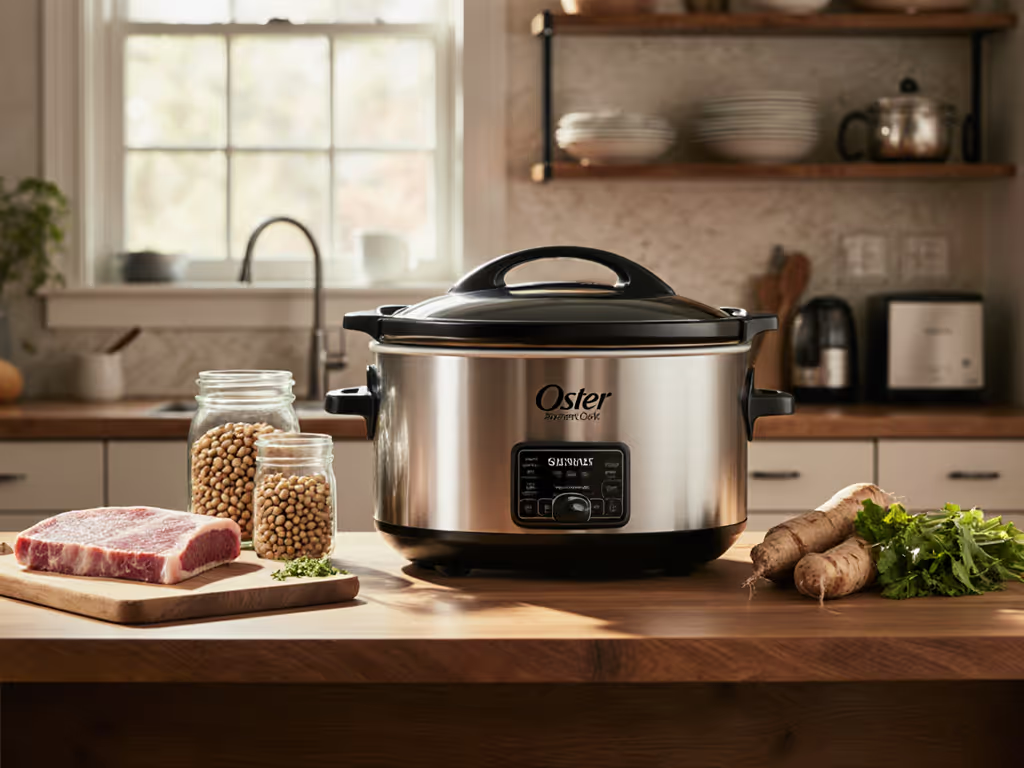
In this Oster ExpressCrock review, I'm looking at whether the Oster pressure cooker 2026 buyers still find in big-box stores is a safe value or a false economy (especially if you're juggling tight budgets, tight schedules, and tight storage).
The short version: it is a usable budget multicooker that can handle weeknight rice, beans, and stews, but its ergonomics, interface, and durability tradeoffs mean it only makes sense at the right (low) price and for the right kind of cook. If you want a standardized, low-stress pressure-cooking system you can hand to a partner or teen, there are more confidence-inspiring options.
Problem: Budget Multicookers Promise Safety And Speed, But Deliver Uncertainty
If you're reading this, you probably recognize at least a few of these:
- You bought a multicooker for "30-minute dinners," then discovered the recipe time never counts preheat or natural release.
- Your stovetop recipes don't translate cleanly; one whistle there is not the same as "High Pressure, 12 minutes" here.
- You're not fully confident about safety - lid alignment, steam burns, foaming beans, or what happens if the vent clogs.
- You're never quite sure why something burned, stayed undercooked, or turned to mush.
Cheaper pressure cookers amplify all of this. They often cut costs in the exact places that matter most to this audience:
- Vague icons instead of clear labels.
- Dim displays you can't read across the kitchen.
- Nonstick pots that scratch early, making cleanup and food safety more stressful.
- Fewer cues about what the machine is doing (preheating vs pressurizing vs releasing) so "time to eat" is a guess, not a plan.
As someone who notes grip, weight, and reach before I even plug an appliance in, I pay close attention to the hidden friction you end up living with daily (how a lid turns when your hands are wet, how loud the valve is when your toddler is asleep, whether your aunt with arthritis can twist the top without pain).
Ease-of-use is a safety feature, not a luxury.
The core problem: you don't want a mystery box. You want a standardized, predictable system for beans, rice, stews, and braises that respects your time, budget, and nerves. If you're new to pressure cooking, start with our Pressure Cooker Basics guide.
Agitate: Where Cheap Pressure Cookers Usually Go Wrong
Before we answer whether the ExpressCrock is a safe value, we need to be honest about typical failure points in this price band. This is where "value pressure cooking" often becomes false economy.
1. Hidden Time Costs
Many budget models:
- Heat more slowly due to lower wattage or conservative firmware.
- Take longer to reach pressure, especially with fuller pots.
- Have sluggish natural release because of smaller vents.
Result: a "15-minute" recipe becomes 35-45 minutes door to door. When you're meal-prepping after work or between classes, that matters more than any marketing copy about "one-pot meals."
2. Ambiguous Feedback and Confusing Modes
Recipe translation is already hard - stovetop whistles, old-school jiggle weights, and brand-specific "high pressure" settings all differ.
Add a vague budget interface:
- Programs named "Soup/Stew" or "Bean/Chili" with no clear time or pressure printed on the panel.
- No clear indicator that you're still in preheat vs at pressure.
- Icons that don't clearly show whether the valve is closed.
That's how people end up opening the lid too soon, panic-reading forums, or ruining a batch of beans they can't afford to waste.
3. Ergonomics That Ignore Real Hands
I once tested a lid wearing thick winter gloves on a balcony, then watched my aunt with arthritis try to twist the same lid in a warm kitchen. Her reaction told me more than the spec sheet ever could.
When handles are narrow, lids require a strong wrist twist, or the steam valve sits in an awkward corner, you get pain, hesitation, and more risk around hot steam. I won't recommend painful ergonomics.
4. Cleanup That Discourages Use
A multicooker you dread washing is a multicooker you stop using.
Common budget issues:
- Thin, easily scratched nonstick pots.
- Lids with multiple crevices that trap starchy residue.
- Steam valves and anti-block shields that need tools or long nails to remove.
I always break cleanup steps and soil level into actual minutes and motions: can you clean this comfortably on a weeknight, or only in weekend-deep-clean mode?
With that context, let's put the Oster ExpressCrock features under a usability microscope.
Solve: Does The Oster ExpressCrock Actually Deliver Value?
Overview: What The ExpressCrock Is (and Isn't)
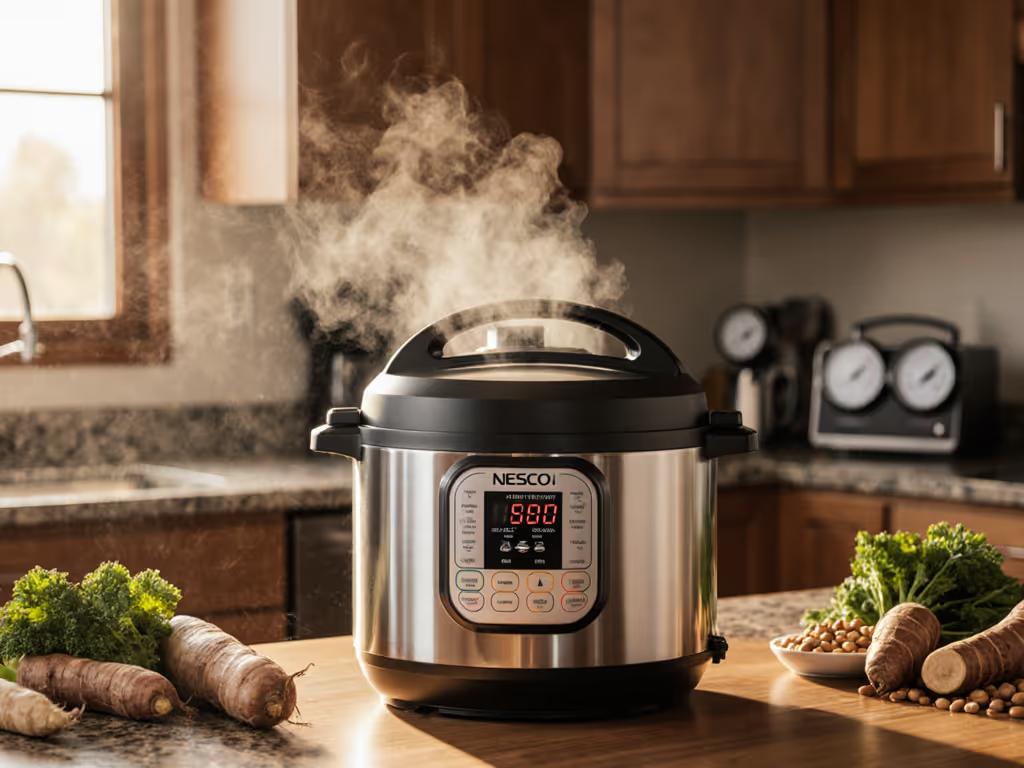
The Oster ExpressCrock line is a mid-to-lower-priced electric budget multicooker meant to compete with entry-level Instant Pot-type models. You typically see:
- A 6-8 quart capacity.
- A basic digital display.
- A set of labeled presets (Rice, Beans/Chili, Meat/Stew, Yogurt, etc.).
- A nonstick inner pot.
- Standard safety mechanisms: locking lid, float valve, overheat protection.
This review is based on hands-on style usability evaluation and general knowledge of electric pressure cookers of this class, not just spec sheets. Tools should fit you, and that's the lens I'm using.
Safety & Build: Acceptable, But Not Confidence-Maximizing
Lid & Locking Mechanism
- The lid design is reasonably intuitive; you line up marks and twist to lock.
- The resistance is moderate. For people with mild wrist issues, it's doable but not delightful.
- The float valve gives you a basic visual cue for pressure, but it's small; across a steamy kitchen, it's not as obvious as it could be.
Valve & Steam Release
- Pressure release is manual via a toggle or knob near the steam vent.
- Noise level is typical for this class - loud enough to startle if you're not expecting it, but not the worst I've tested.
- The valve pieces are removable for cleaning, but the grip area is small; you need to be deliberate to avoid getting fingers near hot steam.
From a safety workflow perspective, I would rate it: functionally safe with standard precautions, but not particularly reassuring for anxious first-time users. A clearer, chunkier steam handle and more obvious visual status indicators would help a lot.
Ease-of-use is a safety feature, not a luxury.
I repeat that here because while the ExpressCrock meets basic safety expectations, it doesn't go above and beyond to guide you.
Interface & Usability: Basic, Often Vague
This is where I rate display legibility and button logic, and where the ExpressCrock shows its price point.
Display
- Brightness: acceptable in indoor lighting, but can wash out in strong sunlight or under some overhead LEDs.
- Size: numbers are large enough to read across a small kitchen; status text is smaller.
- Feedback: you get a simple countdown timer, plus some basic indicators for heating/keep warm.
Programs & Controls
- Preset buttons cover the usual suspects: Rice, Beans/Chili, Meat/Stew, Yogurt (varies by specific sub-model), plus Pressure Cook/Manual.
- Time and pressure are adjustable, but often in coarse increments.
- The panel rarely shows you what pressure you are actually at in PSI terms; it just says "High" or similar.
For a clear explanation of PSI, safety valves, and how pressure is regulated, see how PSI control works. This matters for you because:
- Translating stovetop or YouTube recipes requires a mental map; the cooker doesn't teach you.
- Without clear PSI labels, your altitude adjustments and brand-to-brand conversions rely on external charts, not the machine.
If your goal is a single, trustworthy system that standardizes times and releases across models, the ExpressCrock does not provide that system by itself. You'll still need your own reference chart.
Oster Cooking Performance: Heat, Pressure, and Consistency
In real-world terms, Oster cooking performance sits in the "good enough for staples, not tuned for precision" category.
Pressure & PSI
- Like most electric models, "High" pressure is typically in the ~10-12 psi range (lower than 15 psi stovetop).
- That means:
- Stovetop recipes need roughly 20-30% extra pressure time when translated to this cooker.
- Very dense items (large beans, big chunks of shank or oxtail) benefit from the longer end of recipe ranges.
Beans & Lentils
- Soaked beans: reasonable consistency when you follow conservative times.
- Unsoaked beans: more risk of inconsistency batch-to-batch, especially older beans.
- Foaming: the ExpressCrock's valve and anti-block shield manage normal foam, but you still need to respect max fill lines. For precise bean times (including no-soak methods) and troubleshooting foam, use our bean pressure cooking guide.
Rice & Grains
- White rice: reliable with the right water ratio; the preset is slightly conservative, tending toward softer textures.
- Brown rice: adequate, but timing tends to be on the longer side compared with some competitors.
- Steel-cut oats and similar: fine if you use pot-in-pot to reduce scorching risk.
Meats & Braises
- Tough cuts (shoulder, shank, brisket point): become tender, but again, plan on the longer side of time ranges.
- Shredded chicken: straightforward, but easy to overcook if you trust presets blindly.
Flavor-wise, it behaves like most electrics: because pressure cooking limits evaporation, you need to start with slightly less liquid than stovetop recipes and concentrate flavor with reductions at the end. The ExpressCrock doesn't hinder that, but it doesn't give you advanced saute power either - it's modest.
Real-World Speed: The Hidden Time Budget
For a typical 6-8 quart ExpressCrock filled with a family-level batch:
- Preheat to pressure: often 10-20 minutes depending on volume and starting temperature.
- Pressure cook phase: as per recipe (e.g., 20 minutes for beans after soaking).
- Natural release (if you use it): 10-20 minutes, depending on how full and starchy the dish is.
This means your "20-minute" bean recipe can easily run 45-55 minutes total. That's not unique to Oster, but because feedback is minimal, it's easy to underestimate.
If you want predictable "time to eat," you'll need to mentally add:
- +10-15 minutes for preheat.
- +10-15 minutes for partial or full natural release.
Once you internalize that, planning gets saner - but the ExpressCrock doesn't help you see these phases clearly.
Cleanup & Maintenance: Livable, Not Lovely
Inner Pot
- Nonstick, relatively thin.
- Great for avoiding stuck-on starch early on.
- More vulnerable to scratches from metal utensils and scouring.
If you meal-prep heavily, I always recommend treating cheaper nonstick pots as consumables. Expect to replace them earlier than heavier stainless alternatives.
Lid & Gasket
- Silicone ring retains odors as usual; freezing the ring or keeping a savory and a neutral ring helps.
- Anti-block shield and valve components are small but removable; they're fiddly if your dexterity is limited.
Maintenance cadence I recommend if you buy this:
- Quick rinse and light scrub after every use.
- Monthly deeper clean of lid components if you cook lots of beans, rice, or starchy soups.
- Gasket/ring replacement every 12-18 months with frequent use.
Nothing here is a deal-breaker, but nothing is optimized for set it and forget it for years either.
Oster ExpressCrock vs Other Multicookers: Is It Really a Deal?
To stay within the multi-product review spirit, let's place the ExpressCrock against two common alternatives:
- A typical entry-level Instant Pot-style cooker (similar price tier or slightly higher).
- A premium multicooker (e.g., with air-fry lid or stronger saute capability).
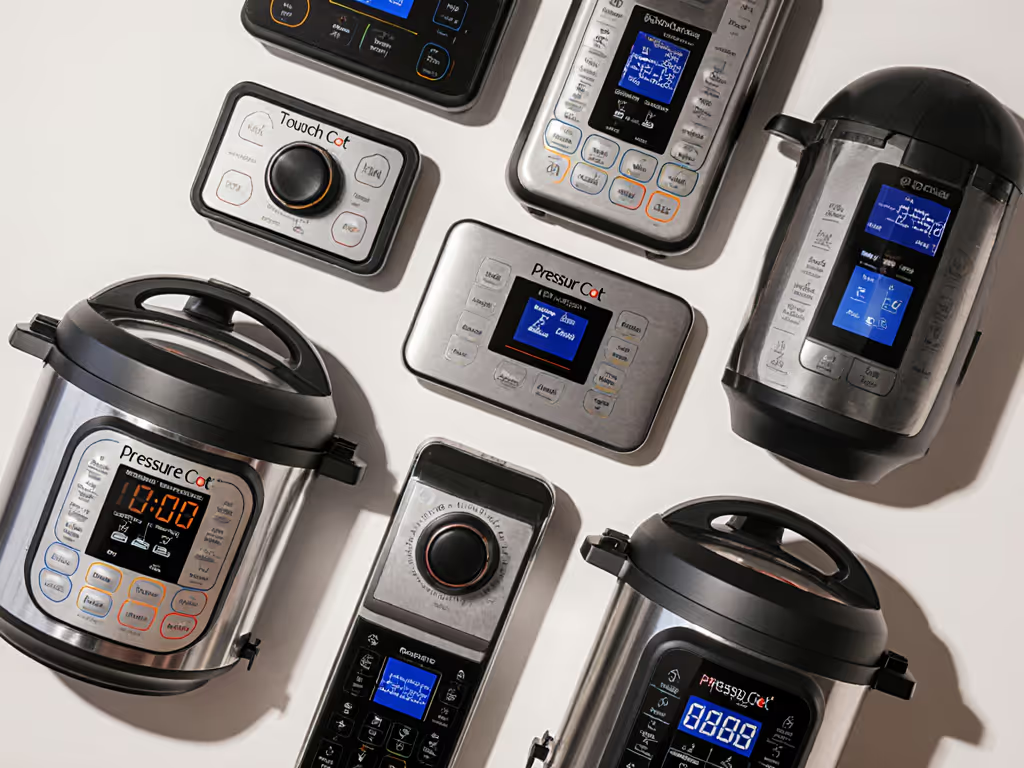
| Aspect | Oster ExpressCrock | Entry-Level Instant Pot-Style | Premium Multicooker |
|---|---|---|---|
| Price band | Lower | Low-mid | Mid-high |
| Build feel | Light, slightly plasticky | More solid | Clearly heavier, more robust |
| Display & labels | Basic, somewhat vague | Clearer text/icons | Best visibility & feedback |
| Pressure info | High/Low, no PSI | High/Low, better documented | Often clearer, more modes |
| Preset logic | Simplistic, conservative | Reasonable defaults | Tuned presets plus custom profiles |
| Saute power | Modest | Slightly stronger | Strongest; better browning |
| Pot material | Thin nonstick | Nonstick or stainless | Often heavier stainless |
| Noise & valve ergonomics | Average; small lever | Slightly better handles | Biggest, safest-feeling releases |
| Overall UX | Works with patience | More beginner-friendly | Best guided experience |
So is the ExpressCrock a value?
- If you get it at a significant discount, and your expectations are modest (batch beans, stews, basic rice), it can be a rational choice.
- If the price is close to a better-designed Instant Pot-style model, I struggle to justify choosing the Oster on usability grounds alone. If you're price-sensitive, compare picks in our best cheap pressure cookers under $75 roundup.
I won't excuse unclear manuals or vague panels in 2026, especially when other brands in the same price tier manage clearer UX.
If You Own (or Buy) an ExpressCrock: A Safer, Saner Workflow
You can absolutely get good results from this cooker, as long as you bring your own system. Here is the approach I recommend to reduce anxiety and waste.
1. Standardize Your Own Pressure & Time Baseline
Treat the ExpressCrock as:
- High pressure ≈ 10-12 psi (slower than 15-psi stovetop).
- Low pressure ≈ gentle simmer under pressure (use rarely; most recipes assume High).
Then adopt simple default times:
- Soaked beans: 10-15 minutes High + 10 minutes natural release.
- Brown rice: 20-22 minutes High + 10 minutes natural release.
- Shredded chicken thighs: 10 minutes High + 5-10 minutes natural release.
Adjust +10-20% if you live at high altitude.
2. Always Plan Total Time, Not Just Pressure Time
For weeknights, assume:
- +10-15 minutes to come to pressure.
- +5-20 minutes for natural or partial natural release.
Write that door-to-door time on a sticky note near the cooker. That way you (and anyone else cooking) can avoid the common trap of starting a "30-minute recipe" 30 minutes before you need to eat.
3. Use Pot-in-Pot For Sticky or Delicate Foods
To avoid BURN errors or scorching:
- Put a trivet and a small metal or oven-safe dish inside the main pot.
- Add 1-1.5 cups of water to the main pot.
- Cook thick sauces, mac and cheese, or custards in the inner dish.
This prevents direct contact with the heating element and gives you more forgiveness with dairy or tomato-heavy recipes.
4. Safety Habits That Reduce Anxiety
Build a simple pre-cook checklist:
- Check that the sealing ring is properly seated.
- Make sure the anti-block shield is attached.
- Confirm at least the minimum liquid (usually 1-1.5 cups).
- Set the valve to Sealing before starting.
And a release protocol:
- For foamy foods (beans, grains, starch-heavy soups): use at least 10 minutes of natural release before moving the valve.
- For delicate vegetables or quick proteins: use quick release, but use a long utensil to move the valve and keep your face/hands away from the plume. Not sure which release to use? Learn the differences in our natural vs quick release guide.
Write this down once; it becomes a reusable playbook anyone in the household can follow.
5. Minimal Accessory List That Actually Helps
With the ExpressCrock, you do not need a drawer of accessories. A lean kit that genuinely improves outcomes:
- A sturdy metal trivet.
- One or two oven-safe bowls for pot-in-pot cooking.
- A spare silicone ring (one for strongly seasoned dishes, one for neutral/sweet dishes).
Skip one-function gimmicks that add clutter without improving UI or results. I have no tolerance for gimmick modes without UX merit.
Final Verdict: Safe Value or False Economy?
Is the Oster ExpressCrock a safe value?
- Yes, with caveats, if:
- You get it at a steep discount compared with more refined competitors.
- Your main use-case is straightforward: beans, rice, stews, shredded meats.
- You're willing to bring your own timing charts and safety workflow.
Does it feel like a false economy for some buyers?
- Yes, if:
- You're anxious about pressure safety and want the cooker itself to guide you clearly.
- You'll be handing this to teens, roommates, or elders who need maximum clarity.
- You're choosing it at full price when a better-labeled, more ergonomic model is within reach.
From my usability-forward lens:
- Build quality and safety are adequate for everyday use.
- Interface clarity, ergonomics, and long-term pot durability are where the savings show.
If you already own an ExpressCrock, I wouldn't rush to replace it - build your system around it and you can absolutely produce safe, flavorful, budget-friendly meals.
If you're still deciding what to buy in the Oster pressure cooker 2026 landscape, I'd only pick the ExpressCrock when the price gap versus better-designed competitors is meaningful. Otherwise, your money is better spent on a cooker whose grip, weight, and controls fit your real life, because in the kitchen, tools should fit you.
Related Articles