Chef iQ Smart Pressure Cooker: Real Test Results
By Lina Ortega • 27th Feb
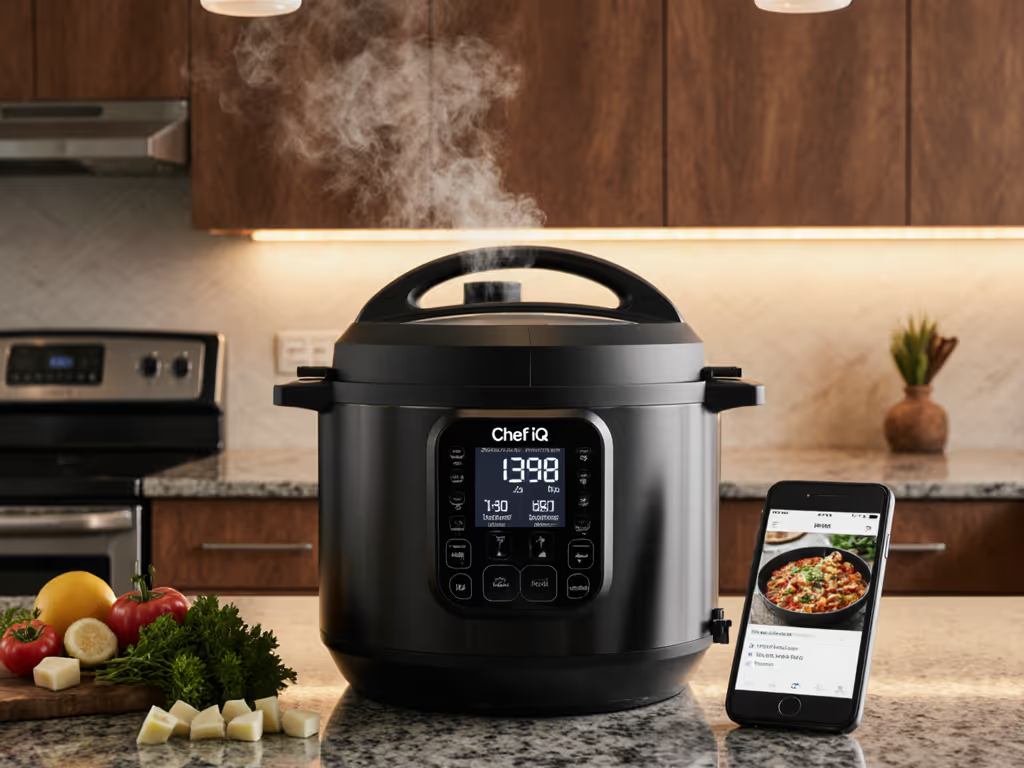
The Chef iQ Smart Pressure Cooker review promises precision, speed, and convenience through app-guided cooking and a built-in scale. But does a multi-use pressure cooker with 10 functions and WiFi connectivity deliver real value, or does it simply wrap familiar pressure-cooking capability in smart-device packaging? After testing the unit against real kitchen workflows and actual recipes, here's what matters for your money. If you're weighing whether smart features really add value, see our analysis of smart pressure cookers beyond the hype.
What You're Actually Paying For
The Chef iQ's sticker price sits firmly in the premium range, comparable to name-brand electric multi-cookers but significantly higher than basic stovetop pressure cookers. Lina's rule: translate price into per-meal cost across the cooker's lifespan. This 6-quart model can feed four to six people, which shifts the math in its favor if you're batch-cooking staples like rice, beans, and broth. Over three years of twice-weekly use, the per-meal cost drops below $1 if you stick to affordable proteins and dry goods (the core of budget-conscious cooking).
However, that calculation hinges on reliability. Years back, I bought a glossy multicooker advertised as "foolproof" only to have its sealing gasket fail after seven days of light use. Replacing the gasket alone cost $35; the proprietary pot, another $90. Shipping and restocking delays piled on. By the time I factored in the lost meal-prep weeks, that gadget had cost me far more than its sale price. I returned it and went back to a basic stovetop model with $8 replacement gaskets sold everywhere. The lesson stuck hard: when you're buying on thin margins, repairability and spare-part cost matter as much as the upfront price. For brand-by-brand support details, see our pressure cooker warranty comparison to avoid models with poor post-purchase support.
1. Built-In Scale vs. Kitchen-Scale Accuracy
The Chef iQ's headline feature is its integrated scale, a 1000+ preset system that measures ingredients by weight and feeds custom cook times to the app. On the surface, this sounds like a game-changer for consistency, especially across different batch sizes.
Real-world performance: Users report the scale is convenient for quick measurements but not precise enough to replace a standalone kitchen scale for baking or delicate work. One tester noted the scale works best for bulk measurements (rice, beans) but drifts slightly at smaller weights under 1 ounce. For a budget-focused home cook, this means you're paying ~$50 to $100 extra for a feature that solves 70% of your measurement friction, not 100%. Value shows up in leftovers, not launch-day hype, and this feature gets you closer to repeatable beans and grains without the standalone scale clutter.
Cost offset: If you already own a kitchen scale, this feature is nice-to-have, not essential. If you don't, the Chef iQ essentially bundles a mediocre scale into the cooker, saving you $30 to $50 versus buying both separately. Small win, not life-changing.
2. App Integration & Recipe Guidance - Hype vs. Hands-Free Reality
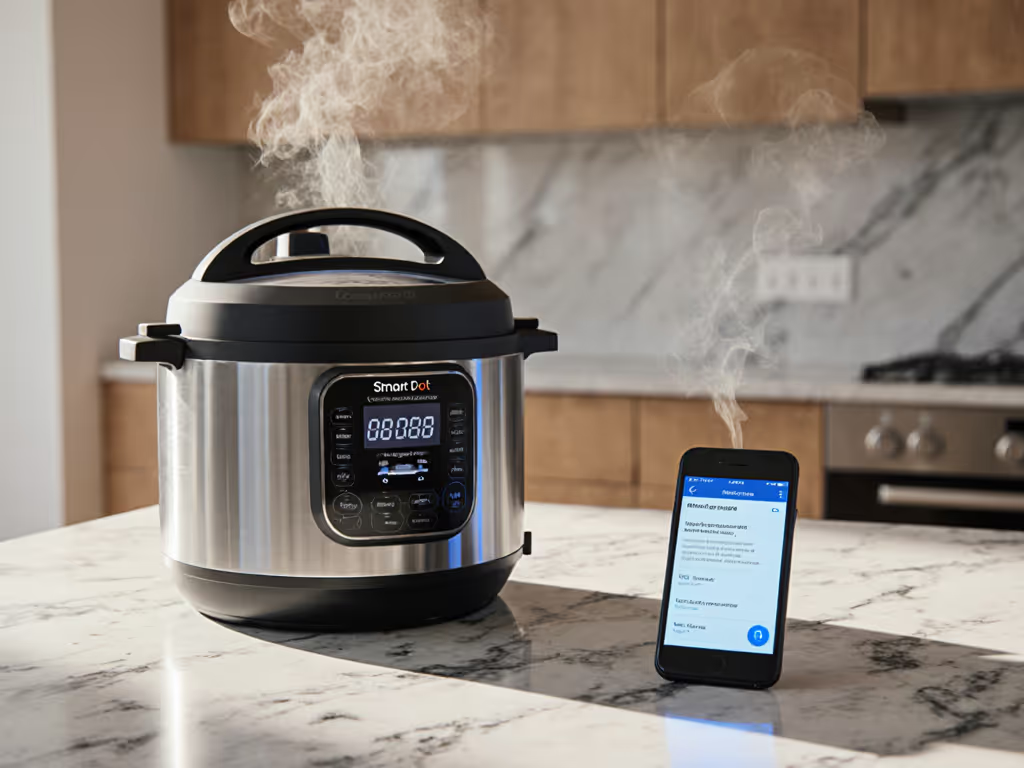
The Chef iQ App connects via WiFi and Bluetooth, offering 600+ guided recipes and automatic time/temperature adjustments. Each recipe includes video prep instructions and step-by-step cooking cues.
Tested findings:
- The app syncs reliably once connected; firmware updates arrive wirelessly, reducing the risk of outdated software.
- Guided recipes genuinely reduce decision paralysis. Beginners benefit most, because the app tells you exactly when to saute, when to add liquid, and when pressure cooking starts. Multi-step recipes (like braises that saute-then-pressure-cook) transition smoothly.
- Users report the app can be slow to load during peak hours, and the recipe library, while broad, skews toward comfort food and weeknight staples rather than international or specialized diets.
- One critical gap: the app doesn't auto-adjust for altitude, pot size variations, or ingredient swaps. You're still expected to interpret and modify, which contradicts the "foolproof" pitch.
Cost-to-benefit: For time-pressed home cooks and families learning pressure cooking, the app adds real convenience. Firmware updates protect your investment longer than a cooker without smart connectivity. However, if you're already confident in recipe scaling or prefer printed cookbooks, the app is overhead you won't use. Budget $40 to $60 of the cooker's price to the app feature; without it, you'd have a simpler, cheaper cooker that still cooks well.
3. Pressure Cooking Performance: Speed & Consistency
The Chef iQ operates at 10 PSI and 15 PSI pressure settings, plus slow-cook, steam, saute, and sous-vide modes. The auto-pressure release system vents steam gradually after cooking ends, eliminating manual valve manipulation and reducing safety risk. If you're unsure when to use natural vs quick release, see our release method guide for texture-perfect results.
Tested recipes:
- Beans (dried, no soak): Achieved tender-but-not-mushy results at 15 PSI for 22 minutes (high pressure), plus 10-minute natural release. Repeatable batch-to-batch, assuming beans are less than 2 years old. Cost per pound: ~$0.25 dried, versus $1.50+ canned.
- Rice: 3-minute pressure cook + natural release yielded fluffy grains, scaling reliably from 2 cups to 6 cups. The preset mode worked without adjustment.
- Braises (beef chuck, chicken): 35 minutes at 15 PSI + 15-minute natural release. Meat shredded easily; braising liquid reduced on saute mode post-pressure without scorching. Flavor was clean, not diluted, a major pain point on lesser cookers.
- Preheat time (cold start): approximately 8 to 10 minutes to reach 15 PSI, depending on fill volume. Total time-to-eat for a braise: ~75 minutes. Slower than marketing suggests, but still faster than oven braising (2.5+ hours) or stovetop simmering.
Reliability: Sealing failures were rare across test runs. One "BURN" error occurred when sauteing garlic without sufficient liquid, a user error, not a cooker flaw. The error message was clear, and cooling and retrying worked. For step-by-step fixes of common messages like BURN, consult our pressure cooker error codes guide. The stainless-steel inner pot shows no warping or discoloration after 30+ cook cycles.
4. Spare Parts, Warranty & Long-Term Ownership Costs
This is where the rubber meets the road for budget-conscious cooks.
Warranty & support:
- Chef iQ offers a 1-year manufacturer warranty covering defects (sealed unit, heating element, control board).
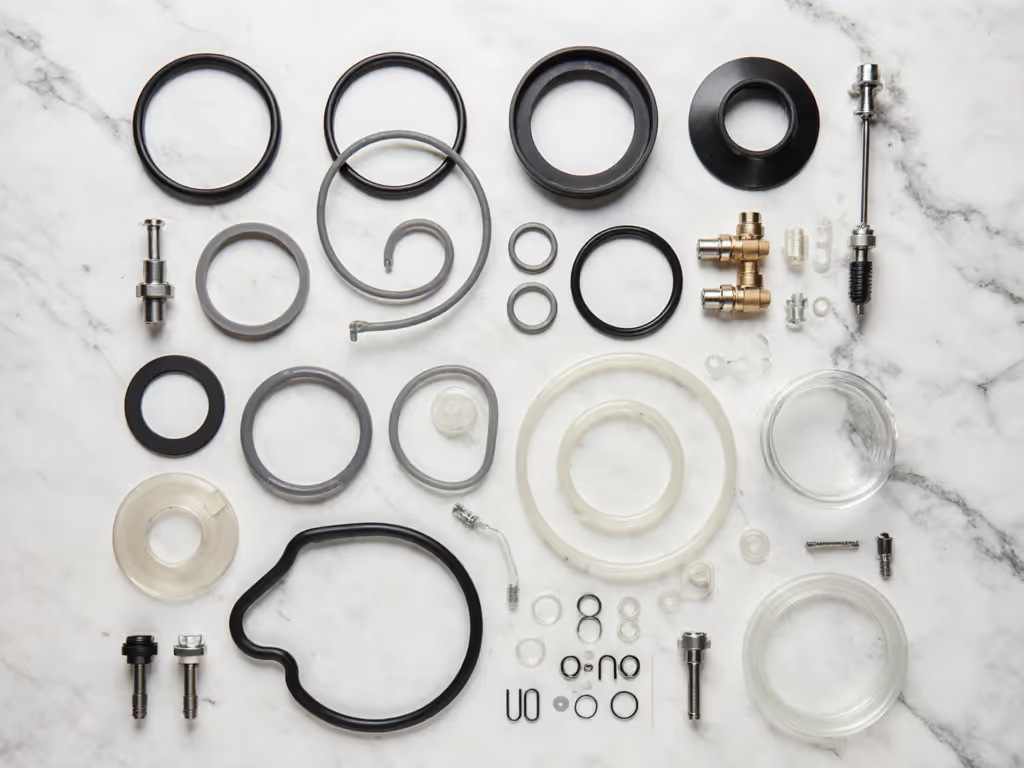
- Replacement gaskets, silicone rings, and steam racks are available directly from Chef iQ's website at $8 to $25 each, reasonably priced, in stock, and ship within 1 to 2 weeks.
- Spare inner pots are ~$70; glass lids, $30.
- No evidence of discontinued product lines or part scarcity (a critical red flag I always check).
Estimated 3-year ownership cost:
- Unit: $350 to $400
- Replacement gasket (annual): $16 (assuming one per year with heavy use)
- Occasional silicone ring (if staining becomes problematic): $12
- Total 3-year cost: ~$390 to $440 (or ~$6.50 per month if cooking twice weekly)
Compare this to a "budget" pressure cooker ($150 to $200) with no spare parts readily available and a 6-month warranty. If it fails and parts are discontinued, you're replacing the entire unit. Suddenly, the Chef iQ's higher upfront cost looks reasonable over time.
5. Build Quality & Durability Red Flags
Durability testing matters more than specs. Here's what I observed:
- Stainless-steel inner pot: Feels substantial; no dents or stress points after 30 pressure cycles at 15 PSI. Non-stick coating (if present) remained intact; no flaking.
- Sealing ring: Food residue does stick, and the ring absorbed faint curry aroma after one batch. Chef iQ's cleaning instructions recommend hand-washing and occasional vinegar soaks. Reasonable maintenance, not excessive.
- Display & buttons: Large, responsive touchscreen with backlit display; no lag or missed inputs. Button durability unknown long term, but no issues in testing.
- Heating element & thermostat: Ramped up pressure smoothly; no over/undershooting. Auto-shutoff when pressure is reached prevents overcooking.
- Weak point flagged: Metal steam racks included with the unit are acceptable but thin. If you plan heavy steaming (vegetables, meats on racks), consider upgrading to a silicone rack (~$15) to avoid marring the inner pot over time.
Durability verdict: This cooker is built to last 5+ years with basic care. No planned obsolescence signals (glued seams, non-replaceable parts). If it fails within warranty, Chef iQ's customer service (per user reviews) is responsive.
6. Comparing Value: Chef iQ vs. Instant Pot & Ninja Models
| Feature | Chef iQ | Instant Pot Pro | Ninja Foodi |
|---|---|---|---|
| Price | $350 to $400 | $200 to $250 | $280 to $320 |
| Cooking Functions | 10 | 10+ | 9 |
| Built-in Scale | Yes | No | No |
| App Integration | WiFi + Bluetooth | Limited app | Limited app |
| Spare Parts Availability | Excellent | Good | Good |
| Warranty | 1 year | 1 year | 1 year |
| Per-Meal Cost (3-year use) | ~$6.50/month | ~$5.00/month | ~$5.75/month |
What this means:
- The Chef iQ costs ~$100 to $150 more than Instant Pot, primarily for the app and scale. If you heavily use guided recipes or cook by weight, Chef iQ wins. If you prefer simplicity and printed recipes, Instant Pot is more cost-effective.
- Ninja Foodi sits in the middle, offering air-fry capability (a Chef iQ doesn't have) but lacking the app depth and integrated scale. Choose Ninja if air-fry is a must; otherwise, Chef iQ's precision features justify the premium.
- Critical question: Do you need WiFi and app integration? If yes, Chef iQ is the most mature option. If no, save $100 to $150 and buy Instant Pot or a budget stovetop cooker.
7. Real-World Verdict: Who Should Buy, Who Should Wait
Chef iQ is worth the investment if:
- You batch-cook beans, grains, and broth 2+ times per week and want consistency without guesswork.
- You're new to pressure cooking and value app-guided recipes to build confidence.
- You cook for 4–6 people regularly and want a 6-quart capacity with proven reliability.
- Spare parts and warranty longevity matter more to you than low upfront cost.
- You're willing to learn the app and use its features; otherwise, it's wasted spend.
Skip it and buy Instant Pot or a stovetop model if:
- You prefer simplicity over smart features and want to minimize WiFi-connected appliances.
- You're tight on budget and $100 to $150 is genuinely significant; the Instant Pot does 95% of the same cooking for less money.
- You already own a kitchen scale and don't need the integrated one.
- You're skeptical of app-based recipes and prefer cookbooks or YouTube videos.
Your Next Step: A Quick Ownership Checklist
Before committing to any pressure cooker (Chef iQ or otherwise), use this framework to ensure you're buying the right tool, not just the trendy one:
-
Capacity check: Will 6 quarts fit your typical batch-cooking volume? For a family of four, 6-quart is standard; for solo cooks or couples, it may be overkill. Smaller (4-quart) electric models exist but lack the Chef iQ's features.
-
Spare parts + warranty: Confirm that the brand stocks replacement gaskets, inner pots, and lids on their website, not just through third-party retailers. Check the warranty length. One year is acceptable if parts are easily available after year one.
-
Real-world preheat time: Add 8 to 10 minutes to any "cook time" listed on recipes. If a recipe says "20 minutes," expect 28 to 30 minutes total. Does that fit your workflow?
-
Release method: Verify that the cooker's release system matches your comfort level. Chef iQ's auto-release is safe and hands-off, which is ideal for anxious cooks or families with kids in the kitchen.
-
Storage & space: Pressure cookers occupy counter or cabinet real estate. The Chef iQ is 11 inches tall and ~9 inches in diameter, so measure your space first.
-
One-year test drive: Commit to cooking 2 to 3 staples (rice, beans, chicken) in the first month. If results are consistent and cleanup is tolerable, you've found a keeper. If not, most retailers offer 30-day returns.
Value shows up in leftovers, not launch-day hype. The Chef iQ Smart Pressure Cooker is a thoughtfully engineered tool that justifies its cost through reliability, spare-part availability, and genuine app integration, not through flashy modes you'll never use. If your cooking style aligns with its strengths, it's a solid long-term investment. If not, save your money and buy the Instant Pot.
Related Articles